
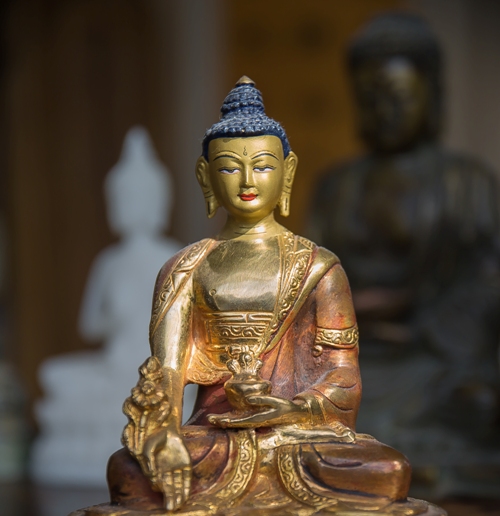
What is zen and zazen?
Zazen literally means seated meditation. During zazen we simply sit in silence and observe the movement of our own mind. Instead of trying to control our thoughts or emotions, we allow them to arise and pass away. Gradually, we become less identified with our feelings and thoughts. We begin to notice the spaces between our thoughts and discover a little more freedom.
Zazen doesn’t teach you that you have to become a better person or another person. In the end, there is nothing to change or improve. Thoughts, feelings, wishes and fears are all welcome. Let them come and let them go. Allow zazen to work on you. Gradually, you come home to the person you have always been.
How to practice zazen?
Find your position
Traditionally, zazen is practiced sitting cross-legged in either the full or half-lotus position. Another option is to sit in seiza, with the buttocks resting on the heels. If necessary, you can also sit on a chair. In a Zen setting, you usually sit on a zafu (meditation cushion), which is placed on top of a zabuton (mat).
Settle into your posture
01 – KNEES
Let both knees rest on the floor, or as close to it as possible.
02 – SPINE
Sit with an upright, relaxed spine.
03 – HANDS
Rest your hands in the cosmic mudra: the left hand resting on the right, with the thumbs lightly touching
04 – SHOULDERS
Relax your shoulders.
05 – CHIN
Tuck the chin in slightly so that the crown of the head is the highest point.
06 – TONGUE
Let the tip of the tongue rest gently against the roof of the mouth, just behind the upper front teeth.
07 – EYES
Keep the eyes half open, with a soft, unfocused gaze.
08 – BREATH
Allow your attention to rest on the breath.
A typical zen session
During a Zen practice session, a period of zazen usually lasts between 20 and 30 minutes and is followed by kinhin, mindful walking meditation. This is typically followed by another period of zazen. Each sitting period begins with three strikes of the gong. Two strikes signal the end of a sitting period, while the final period of the session concludes with a single strike. The exact length of each sitting period depends on the practice group.
GONG
3 strikes
ZAZEN
seated meditation
GONG
2 strikes
KINHIN
walking meditation
GONG
3 strikes
ZAZEN
seated meditation
GONG
1 strike – end
Why practice zazen?
Many years ago, while studying at a yoga school in Amsterdam, I was introduced to zazen – the art of sitting in silence – by Zen teacher Nico Tenkō Roshi.
I remember how difficult it was for me to sit still for just five minutes without moving and simply allow things to be. My knees and upper back began to ache, despite all the yoga exercises.
I became frustrated because my mind kept racing. I couldn’t quiet my mind for a second.
The purpose of zazen is not to quiet the mind
What a relief it was to hear Nico tell me that the purpose of zazen is not to try to quiet the mind.
We are not trying to stop thoughts from arising. That is not the purpose of zazen at all.
Thoughts come and go by themselves, like clouds passing through the sky. In zazen, we simply notice them without holding on to them.
Allow things to be as they are. Allow yourself to be as you are.
A question I kept coming back to
Of course, I had many questions. The most important was:
What is the purpose of zazen? Will it make you a better person?
Nico, in his wonderfully playful, elusive Zen style, smiled and replied:
“You have to ask my wife!”
Nothing is fixed
Later, in The Hague, I joined Kees van de Bunt’s Zen group at the Frankenslag, like many others before me.
On the wall of the zendo hung a list with the names of all the people who ever visited his sangha. Many joined, many left.
“If they had all stayed, we could have filled the Statenhal,”, he would say.
Of course, he said it without regret. People come and go, just as thoughts come and go.
I asked Kees whether, thanks to zazen, he had fewer thoughts than before. His answer:
“Perhaps not fewer—but perhaps I’m a little less bothered by them.”
The mind is not the enemy
Nico loved to tell the stories of the Ten Ox-Herding Pictures, a famous Zen series of illustrations in which the mind is compared to an ox: restless, wandering, and difficult to guide.
However, zazen is not about forcing the mind into silence or trying to control it. My Zen teacher and abbot of Zen River in Uithuizen,Tenkei Roshi, often says:
“We don’t want to kill the mind, we want it to be alive and sparkling.”
Whenever the mind wanders, we simply and gently bring it back to this very moment.
Following the breath is one way of doing this. Again and again, we return to this very moment – to our original nature.
Schedule and booking
Monday: 07:30–08:30
Tuesday: 20:00–21:00
Saturday: 10:00–11:30 – Introduction to Meditation course – starts 26th September 2026.
September 26 – December 12 (6 sessions)
- Price: € 95
All classes take place at Valkenboslaan 324, 2563 ED Den Haag.
To sign up, please message Taco directly on WhatsApp. If you have any questions, feel free to reach out to him there as well. Alternatively, you can use the contact form below.
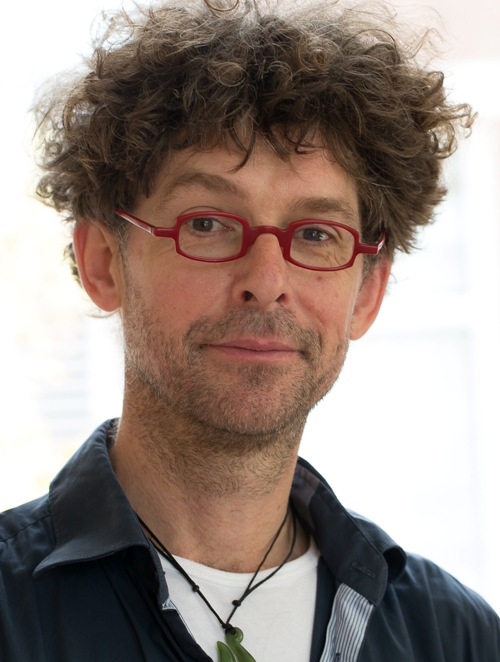
About Taco
As a journalist, I was always fascinated by what motivates people. Why do they do what they do? I loved listening to the stories of people from all walks of life and discovering what drove them. Along the way, however, I forgot to pay attention to my own driving force.
A divorce, an illness, and eventually a burnout became unexpected teachers. At the time, I couldn’t see their meaning, but they led me onto a different path: first yoga, then Qi Gong and Traditional Chinese Medicine, and eventually the practice of zazen.
In the early 2000s, I attended a Zen weekend led by Tenkei Roshi. He had recently returned from the United States to the Netherlands and was looking for a place to establish his teaching. It was my very first sesshin, held at the Tiltenberg. I remember being in considerable physical pain throughout the weekend. My knees hurt like hell, the pain between my shoulder blades was almost unbearable and in my mind anger grew as the jikido – the timekeeper – still didn’t hit the gong…
Yet something profound happened. Something clicked. There were moments the pain was completely gone. There were moments of complete inner peace. I wanted to experience it again. Perhaps it was what is sometimes called ‘honeymoon Zen’—the sense of wonder and enthusiasm that often accompanies a first encounter with zazen. Whatever it was, I knew I wanted to continue.
As I was leaving, I met a man wearing a hat and a broad smile who simply said, “See you later!”
A few months later, I found myself at Zen River in Uithuizen, in the north of the Netherlands, where Tenkei Roshi established Zen River Temple. Since then, I have returned again and again to practice zazen in a beautiful place, surrounded by wonderful people.
Tenkei Roshi became my formal teacher in 2004, and in December 2005 I received jukai, the ceremony of receiving the Buddhist precepts. Jukai is a commitment to live according to these principles—not stealing, not lying, not elevating oneself while putting others down, and equally, not putting myself down and elevating others. It is an ongoing practice of living with integrity, compassion, and awareness.
You might ask yourself: And what did zazen do for Taco? Did he become a better person, a more relaxed person? I would answer: “You have to ask my wife.”
Do you want to know her answer? “You sit for nothing.”
She is absolutely right. In zazen, we really do sit for nothing.